
Technology 83 · CageSpar

San Francisco · Sep 22, 2026 · REK staging

Lapenna T800

Recurring job: build & save teleop bout sheets / kit compares for training notes

Viral SF cage night (Frankie Lapenna vs EngineAI T800, REK, teleop) is the spark — CageSpar is the notebook you reopen. Dial corners, park named sheets, share a URL, check ANSUR/NHANES percentiles. Keep the curiosity; skip the doom soundtrack.


Named bout library Shareable URL kits ANSUR II · NHANES · T800 specs

Octagon cage cam

Reach Δ
Mass ratio
Strike E
Teleop lag
Spar balance 50
Cage cam notes

Drag to orbit · pinch/scroll to zoom. Reduced-motion systems start paused.

Spar

Corner desks

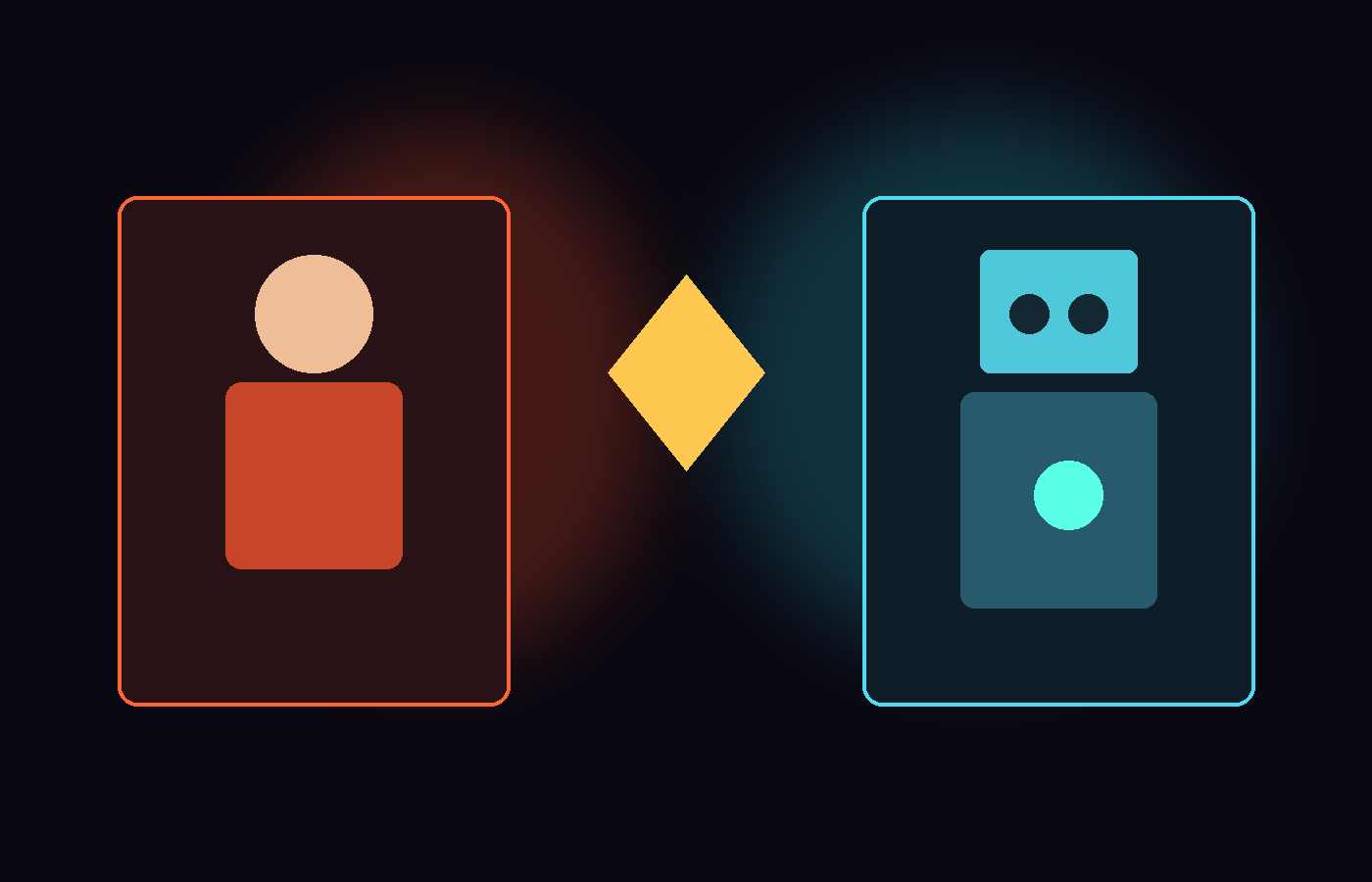
Build the bout like a fight card, then save it as a named sheet for the next training block — red corner human, cyan corner humanoid, broadcast bar for latency.

T800 published specs load with the data pack.

Red corner

Human

Cyan corner

Humanoid

Control loop
Reach advantage Who pokes first
Mass ratio Bot ÷ human
Strike energy ½mv² ballpark · educational
Latency tax Reaction window cost

Exports include kit, estimates, checklist, sources, and share URL — reopen later as training notes. Educational only — not medical, legal, or fight-safety advice.

Bout sheet

Park two kits like tape between rounds. Side-by-side delta, no vibes-only arguing.

Tape A

Empty — dial corners, then save.

Tape B

Empty — dial corners, then save.

Delta

Need both tapes.

Bout facts

Bout sheet library

Name it, save it locally, reload next session. Share the URL so a coach or hobbyist lands on the same kit.

Stored in this browser only (localStorage). Export .txt/.json for backups that travel.

Public data lab

Where your human kit sits vs real published distributions — plus EngineAI T800 product specs as a cyan reference.

Height vs ANSUR II males
Weight percentile
Reach vs ANSUR span
ANSUR II stature percentile ruler · red = you · cyan dash = T800
ANSUR II weight percentile ruler
ANSUR II span ruler (reach proxy)
ANSUR II male stature histogram (working DB) with kit markers
Stature × span cloud (ANSUR percentile pairs) · You vs T800
ANSUR II mean vs CDC NHANES 2021–23 adult mean (amber / cyan) · red = your kit

Dataset citations & caveats

Loading curated public summary tables…

Assumptions board

What the heuristics ARE

  • Relative kit compares: reach Δ, mass ratio, simple ½mv² strike ballpark, latency tax, spar-balance dial.
  • Teleop framing — operator in the loop, soft limits, padding flags.
  • Percentile context from published ANSUR II / NHANES summary tables for the human profile.
  • T800 numbers from EngineAI’s public product page (edition-dependent mass range).

What they are NOT

  • Medical, legal, or fight-safety certification.
  • Impact-lab / force-plate measurements.
  • Ground game, clinch, or cage-wall physics.
  • A claim that the viral bout was unsupervised fight AI.
  • Civilian “average American” sizing when using ANSUR II alone (military sample).

A teleoperated humanoid is a high-end puppet with motors, sensors, and a human brain on a delay. Autonomy would mean the robot choosing strikes without that live driver. The SF bout showed the first kind: impressive presence, human timing, and the familiar problems of mapping input onto a biped that still has to stay upright.

If you are building hobby platforms, celebrate the teleop milestone. Full fight autonomy is a different research mountain — not a weekend firmware flash. Fight fans can read the same footage for latency tells: late slips, careful clinches, soft recoveries.

Teleop vs autonomy

Operator in the loop is still hard robotics. It’s just not unsupervised fight AI — and that’s the honest framing.

Reach before bravado

A few centimeters decide who touches first. They matter more when one side’s footwork is latency-lagged.

Mass ≠ highlight KO

Inertia helps in the clinch and hurts acceleration. Soft limits and padding damp any joule ballpark.

Latency tax

Humans close distance in tenths of a second. 120–200 ms of lag eats parries and counters.

Garage → gym floor playbook

  1. Log round-trip latency on your radio or tether before you add punch speed.
  2. Compare reach at equal stance width before arguing mass.
  3. Treat mass ratio as a shove/clinch cue, not a betting line.
  4. Checklist: padding on, soft limits on, operator warm-up, E-stop within arm’s reach.
  5. Export two tapes from the bout sheet when the group chat starts “who wins.”

Scoreboard legend

Teleop
Human drives the robot live through a control link.
Latency
Round-trip delay from input to motion and feedback.
Reach
Wingspan / punch-extension proxy in centimeters.
Mass ratio
Humanoid mass ÷ human mass — clinch inertia cue.
Strike energy
Educational ½mv² ballpark using effective mass × speed cue.
Soft limits
Force/speed caps for demo-safe exhibition modes.
Balance assist
Stabilization that helps a biped recover from shoves.
Spar balance
0–100 evenness dial from reach, mass, latency — not odds.

Ringside FAQ

Was the T800 fighting on its own?

No. Public framing describes teleoperation — a human in the loop. Still hard robotics; not unsupervised fight AI.

Are the joule numbers lab measurements?

No. Educational ballparks from simple kinetic-energy heuristics. Useful for kit compare — not medical or legal evidence.

Can I train for a real fight with this?

Do not. This is a physics toy and bout explainer. Real sparring needs coaches, rules, and safety gear.

Why does latency dominate the HUD?

Humans close distance in tenths of a second. A 120–200 ms teleop lag eats the window to slip, parry, or plant a counter.

Anti-robot or pro-robot?

Neither. Builder / sports / entertainment tone — curious, competent, lightly humorous. Kit and systems, not apocalypse props.

Method & caveats

Reach advantage = robot reach − human reach. Mass ratio = robot mass ÷ human mass. Strike energy uses effective striking mass (~5–8% of body mass scaled by snap cues) and a speed estimate; soft limits and gloves damp it. Balance score blends normalized reach, mass, and latency. No ground game, no legal analysis, no live scrape.